Farming
Kenya’s Guide to Integrated Pest Management (IPM) for Maize & Beans
Integrated Pest Management (IPM) combines multiple tactics to sustainably control pests and diseases while minimizing chemical use. By adopting IPM, you’ll protect yields, cut input costs and safeguard the environment on your Kenyan farm.
What Makes Integrated Pest Management Kenya So Effective?

Maize and beans form the backbone of food security in Kenya, yet stem borers, fall armyworm and bean fly routinely slash yields by up to 50 percent each season. The Kenya Maize Extension Manual recommends IPM as the most effective way to reduce losses and reliance on expensive pesticides. Similarly, the Common Dry Bean Extension Manual shows that combining cultural, biological and targeted chemical controls boosts bean yields with fewer sprays.
1. Cultural Controls: Outwit Pests Before They Arrive
You can interrupt pest life cycles through timely farm operations:
- Crop rotation. Plant maize after legumes and beans after cereals to starve host-specific pests, such as stem borers and bean weevils.
- Field sanitation. Remove and burn stalks, haulms and infested debris immediately after harvest.
- Resistant varieties. Choose FAW-tolerant maize hybrids like H614 or “IPR” bean varieties that resist common diseases.
These practices reduce pest build-up year over year without any chemical inputs.
2. Mechanical & Physical Controls: Trap and Exclude
Physical barriers and simple tools can catch or repel pests before they damage crops:
- Pheromone traps. Hang FAW pheromone traps at crop edge to monitor and capture moths.
- Hand‐picking. Inspect lower leaves daily and crush armyworm larvae or bean aphids.
- Row covers. Drape light mesh over young bean plants to exclude bean flies.
By integrating these low-cost measures, you’ll catch early infestations and target only hotspots for further treatment.
3. Biological Controls: Enlist Nature’s Helpers
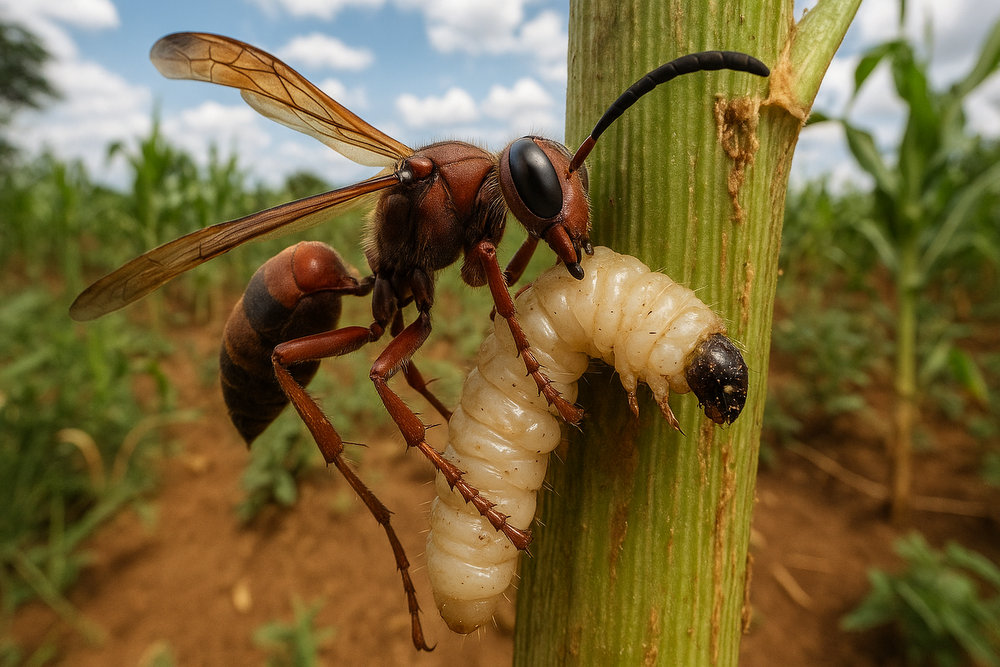
Leverage natural enemies to keep pest populations in check:
- Parasitic wasps & predatory beetles. Preserve field margins and plant nectar-rich strips (e.g., marigold) to attract beneficial insects.
- Entomopathogenic fungi. Apply Metarhizium or Beauveria formulations on maize stem borers to reduce larval survival.
- Push–pull technology. Intercrop Desmodium (“push”) with Napier grass borders (“pull”) to repel stem borers and trap them outside the maize rows.
Research from ICIPE and KALRO shows push–pull can cut stem borer damage by over 80 percent for smallholders.
4. Chemical Controls: Targeted, Responsible Use
When pest pressure exceeds economic thresholds, apply pesticides carefully:
- Scout first. Spray only when traps or visual checks exceed action levels (e.g., 10 FAW larvae per 10 plants).
- Select narrow-spectrum products. Use neem-based biopesticides on beans to spare pollinators and predators.
- Rotate modes of action. Alternate chemical classes (e.g., synthetic pyrethroids with organophosphates) to slow resistance.
Always follow label rates and wear protective gear. This targeted approach cuts your spray frequency by half and preserves beneficials.
5. Monitoring & Record-Keeping: Your IPM Compass
Record weekly observations to stay ahead:
- Trap counts & damage scores. Note pheromone trap catches and the percentage of infested plants.
- Weather logs. Correlate rainfall and temperature with pest outbreaks to predict future risks.
- Treatment outcomes. Track the effectiveness of each tactic to refine your IPM plan.
Consistent data helps you optimize interventions only when and where they’re needed.
Getting Started: Your IPM Action Plan
- Formulate a field map. Mark maize and bean blocks, trap locations and refuge strips.
- Schedule farmer field school sessions. Work with local extension officers for hands-on push–pull and trap-setting demonstrations.
- Source inputs. Purchase pheromone traps, neem biopesticide and Desmodium seeds from accredited agrodealers.
Adopt IPM step by step—start with cultural measures, add monitoring, then layer BIO and chemical controls as required.
By embracing IPM, you’ll reduce your pesticide bills, boost maize and bean yields and ensure long-term soil and ecosystem health.
Need Support?

Ready to master IPM and transform your yields? Join our limited-seat Mentorship Program for Landowners with No Farming Experience at just $100/month (≈ 12 930 KES) or 1 % of your monthly revenue—whichever is higher. Or, if you already have field experience, secure your spot in our Mentorship Program for Landowners with Basic Farming Knowledge for the same rate. Enrollment closes in two weeks—don’t miss out!